
I Checked All The Boxes. Why Can’t I Get Hired?
A data lens on the fresh graduate job search — using FYT’s 6-step analytics approach

A clip circulates: a fresh graduate describes doing “everything right” — stacked internships, strong grades, certifications, leadership roles, a polished CV — yet still no job offer. The emotion is familiar: frustration, anxiety, and the quiet fear that the system is no longer working.
One interpretation is that the market has turned against graduates. Another interpretation is more actionable, and a little more uncomfortable:
Maybe many graduates are optimising inputs without clarity on the outcome they’re truly trying to achieve.
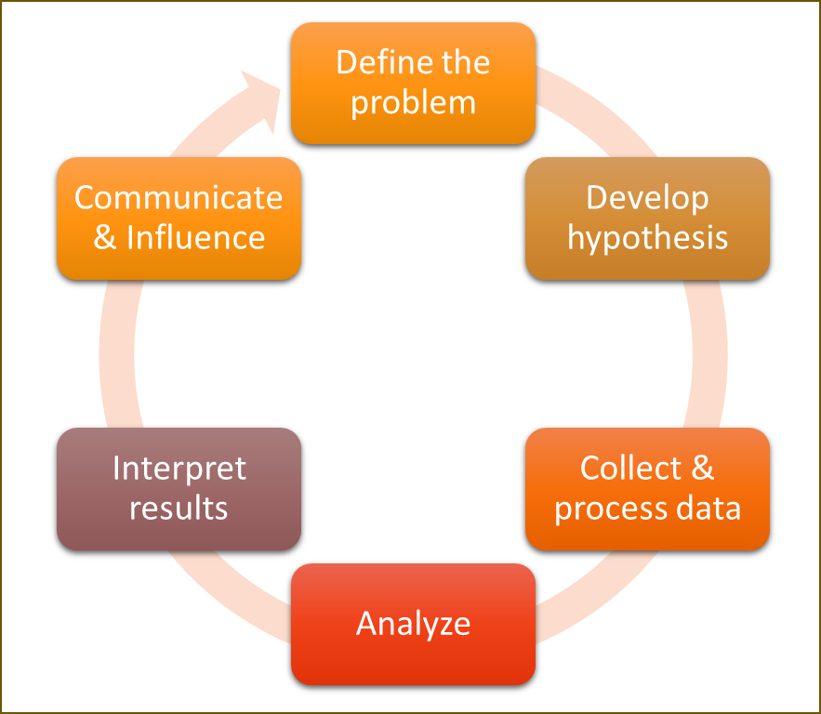
In analytics, this is where things usually go off-track: not because people don’t work hard, but because they start solving the wrong version of the problem. Below is a way to reframe the “checked all the boxes” story through FYT’s 6 steps — not to dismiss the difficulty, but to make the job search more observable, testable, and less emotionally opaque.
Step 1: Define the problem (what are we actually solving for?)
But in practice, the goal often contains constraints that are rarely stated out loud — sometimes even to themselves:
a minimum salary expectation
no shift work / no weekends
a preference for MNCs or “brand-name” employers
a defined promotion timeline
specific industries, locations, work arrangements, or job titles
a desire for role identity (“must match my degree”)
None of these are unreasonable. The point is simply: these are different problems.
“I need employment” and “I need employment under specific constraints” behave very differently. When constraints pile up, the feasible job set shrinks. Then the same job market can feel simultaneously like:
“There are jobs available,” and
“There are no jobs for me.”
This is why job angst can coexist with vacancy demand. Singapore’s job vacancy statistics are designed to show unmet demand, but they don’t guarantee the demand sits in roles that match a graduate’s preferred constraints.
A more precise problem statement might look like:
“I want an entry-level role in X function, in Y sector, within Z salary range, without shift work, preferably in an MNC — within 3 months.”
That’s a real problem statement. It’s also a harder one than “I want a job.” And naming it clearly changes what you should do next.
Step 2: Build a comprehensive set of hypotheses (not just the popular ones)
The interview implies a familiar list of “drivers” that career coaches often promote:
internships
grades and certifications
networks and CCAs
interview skills
LinkedIn presence
These may all help. But analytics asks a sharper question:

Which of these are logically linked to the outcome you defined — under your constraints — in today’s market?
A fuller hypothesis set usually needs at least three categories:
Signal strength (how you present capability)
These are the “box-checking” variables: credentials, projects, portfolio, interview performance, communication, referrals.
Constraint mismatch (what silently eliminates options)
This includes salary floors, shift-work avoidance, narrow employer targeting, and strong preferences for “ideal roles”.
Market mechanics (what is happening outside you)
Hiring cycles, budget freezes, risk appetite, and application volumes. This is where AI matters: when applications become easier to produce, employers may receive more “acceptable” resumes, raising the bar for differentiation and making screening more selective. The advice hasn’t necessarily become wrong — it may have become less differentiating.
The key is not to argue which hypothesis is “true” in general, but to identify which ones are likely dominating your outcome.
Step 3: Gather data (not just spreadsheets — evidence you can observe)
Most job seekers track activity:
how many roles applied
how many interviews secured
That’s useful, but it often fails to diagnose why outcomes differ.
Instead, gather diagnostic data — light, practical, and personal:
What job families give you callbacks vs silence?
Which stage do you consistently drop off (screening, assessment, final round)?
Do referrals convert better than cold applications?
When you lose, what is the plausible reason (skills fit, comp, experience, timing)?
Which constraints are filtering out the majority of roles?
A simple tracker can do this. The point isn’t perfection — it’s to reduce guesswork.
Step 4: Analyse and test hypotheses (stop changing 10 things at once)
Here is a hard truth about “checking all the boxes”:
When you do everything simultaneously, you can’t tell what’s working.
Analytics thinking suggests running small, deliberate experiments — not because the job search is a lab, but because it’s the only way to learn reliably under uncertainty.
Examples:
1) Constraint test
Apply to a small batch of roles slightly outside your preference set (e.g., SME, contract-to-perm, ops-adjacent, shift-inclusive). Compare response rate. If callback rates jump materially, the bottleneck might be constraints more than capability.
2) Positioning test
Use two versions of your resume/profile:
Version A: credentials-led (“I did X internships, Y certs”)
Version B: value-led (“I helped achieve Z outcome, using X skills”)Alternate applications and compare screening rates.
3) Channel test
Split effort across channels:
referrals
recruiters
direct outreach to hiring managers
cold applicationsTrack conversion.

This is the part many candidates skip: they execute advice at scale, but don’t check whether it moves their odds.
Career coaches and advisors often provide guidance in good faith and based on what worked historically. But “what worked for many” isn’t the same as “what works for you, now.”
“if you plan to copy someone else’s answers, make sure you have the same exam paper.”
Step 5: Interpret results (what the data can tell you — and what it can’t)
This step is the difference between “doing more” and “learning better.”
What your evidence can often reveal
Are constraints the primary limiter?
Are you targeting job families with low demand?
Are you failing at a specific stage (screening vs final)?
Is your “signal” unclear (CV/interview), or your “fit” unclear (role match)?
What it cannot guarantee
timelines
fairness
consistent feedback from employers
certainty that effort converts linearly into offers
This is also where many graduates get stuck emotionally: when the process feels like a referendum on worth. Data interpretation helps reframe it as a noisy matching problem — a market process where the employer’s constraints matter as much as yours.
CNA’s reporting and polling suggests many graduates describe long hunts and low reply rates, which aligns with the lived experience — but it still doesn’t tell any single person what to do next. That’s why personal evidence and experimentation matter.
Step 6: Communicate your decision (to the real decision-maker: yourself)
In organisations, analysis only becomes valuable when it turns into a decision and a committed plan. In a job search, the decision-maker is you.
Try writing a one-page “decision memo” for your next month:
My target outcome (and my chosen constraints)
What my data suggests is working
What I will stop doing (noise, not signal)
The next 2 experiments I’ll run
How I’ll measure progress (2–3 metrics max)
This is how you regain agency: not by pretending the market is easy, but by building a feedback loop you can actually learn from.
A final shift that changes the conversation: from “give me a job” to “here’s how I help”
One more thought-provoking angle: job applications are rarely evaluated as a reward for effort. They are evaluated as a bet on value and risk.
So instead of leading with “here are the boxes I checked,” consider leading with:
What problem the employer is trying to solve
Evidence you’ve done related work (projects, internships, real outcomes)
What you will deliver in 30/60/90 days
It’s the same candidate, but a different framing: not “please hire me,” but “here’s how I reduce your uncertainty.”
In an employer’s market, that shift can change the tone of the entire interaction.
Useful data links and FYT references
Below are credible sources readers can use to ground their thinking (public datasets, official statistics, and FYT’s own dashboards/articles).
Workforce Statistics from the Ministry of Manpower - Statistics
Graduate employment survey data - data.gov.sg
FYTs' data research
SG employment trends - SG Employment | Tableau Public
SG income trends - SG Income 2023 | Tableau Public
If this topic resonates — or if you’ve tried some of these approaches and your experience looks different — we’d love to hear from you.
Leave a comment and share what you’re seeing (what worked, what didn’t, what surprised you).
Or reach out to FYT Consulting if you’d like a structured way to make your job search more testable — whether that’s building a simple “job search dataset”, interpreting patterns, or translating your experience into clearer positioning.


The approach and structure presented are very compelling — a powerful framework to navigate and manage the job search process effec